
Jaclyn Kain
Jaclyn Kain’s meticulous photographic process lends itself well to her elusive subject matter.
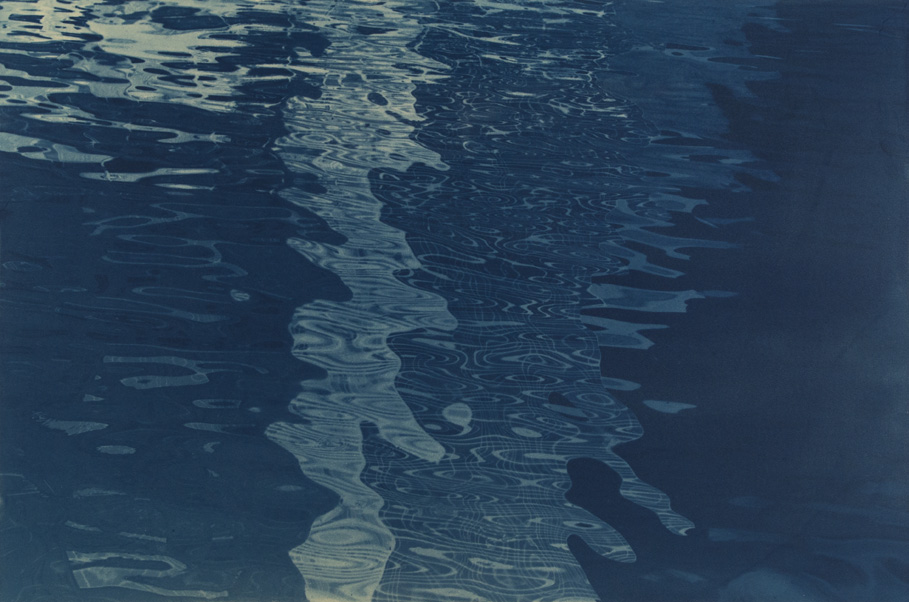
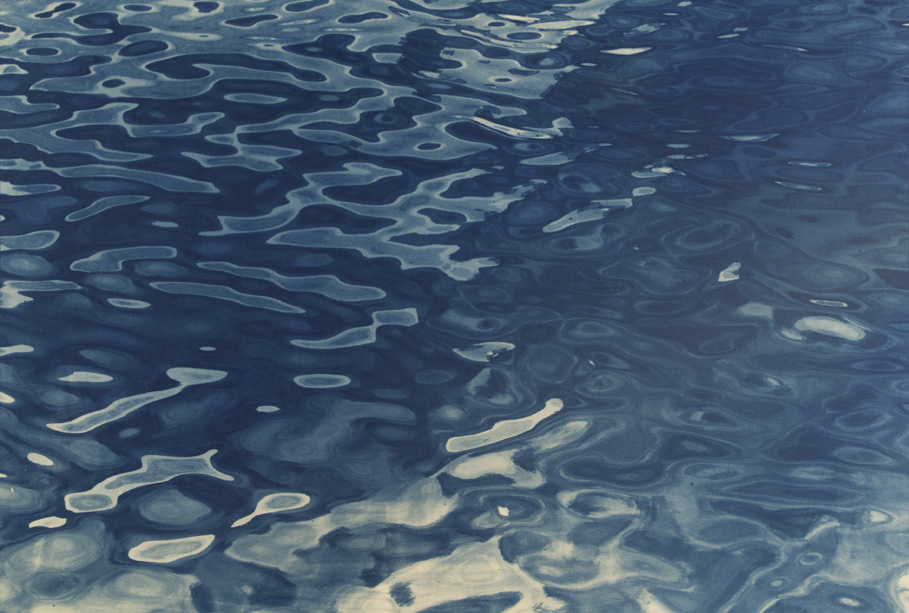
Kain’s 2016 series of photographs momentarily suspend the ever-changing and abstract reflections that play on the surface of the water in the Boston Harbor. Negatives are made from the original digital files and contact-printed using the cyanotype process, which involves painting a light-sensitive, two-part chemistry onto any absorbent surface. The print is exposed in the sun and requires only water to develop. The subject matter and the methodology of the work are intertwined, light and water being both the content of the work and the ingredients required to process the prints. The rich blue hues enhance the transformation of water into formal patterns of light, shadow, and tonality. The resulting images are not reflections of reality but rather reflections of the infinite configurations that fleetingly play on the surface of the harbor.
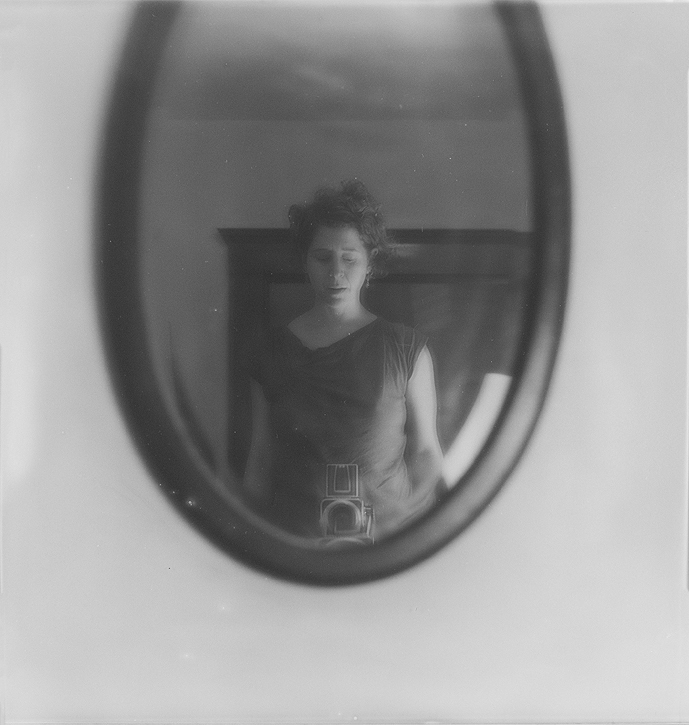
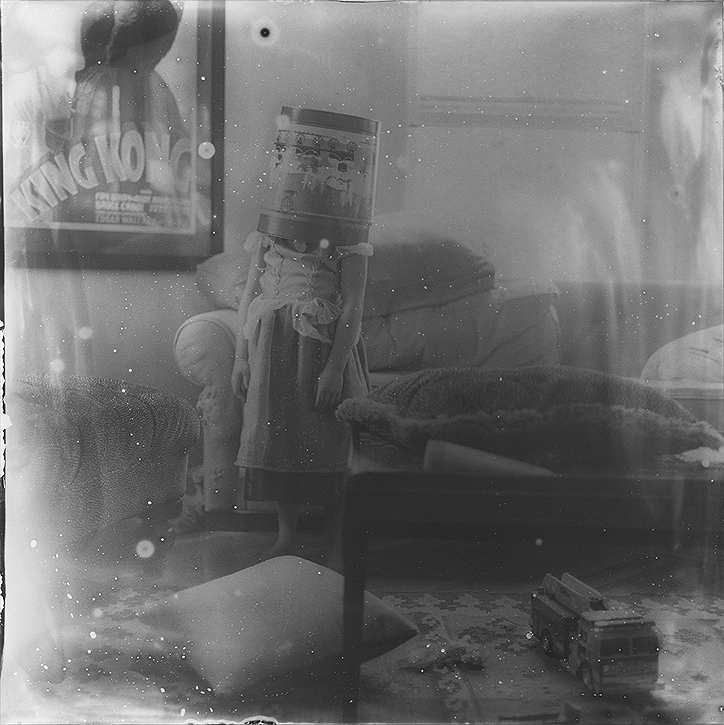
A technique that Kain discovered in 2014 starts with liquid emulsion being applied to a glass or vintage mirror. This prepared surface is then exposed under an enlarger to her negative, while simultaneously being developed, resulting in the finished object. A test print, commonly used among photographers, isn’t possible with this technique. What results from this process is often uncontrollable and immediate, characteristics that Kain both likes and nudges.
The work and all its mystery is enhanced by Kain’s process. The surfaces resemble skin; they are uneven, cloudy in some places and transparent in others, and evasive.
In her previous work her models were set in simple interiors, revealing subtle differences in their form. In her new work, the actors and actresses are very close to Kain: her daughter, son, and even a self-portrait. The work is much more part of a narrative or drama that is quietly unfolding. Kain’s identity as an artist and mother is explored in a domestic setting, presumably Kain’s home. The work reads as a series of tableaux.
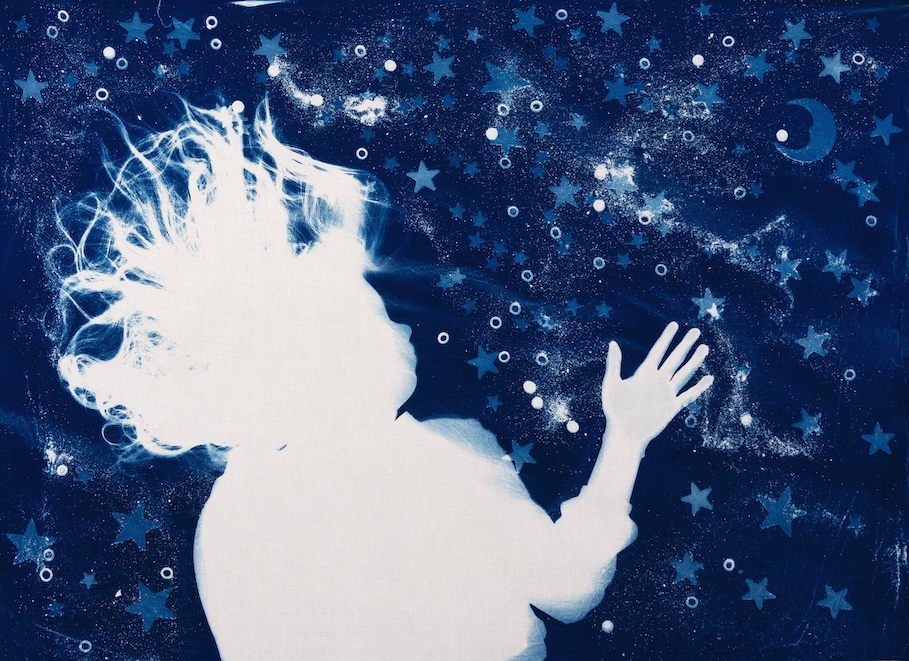
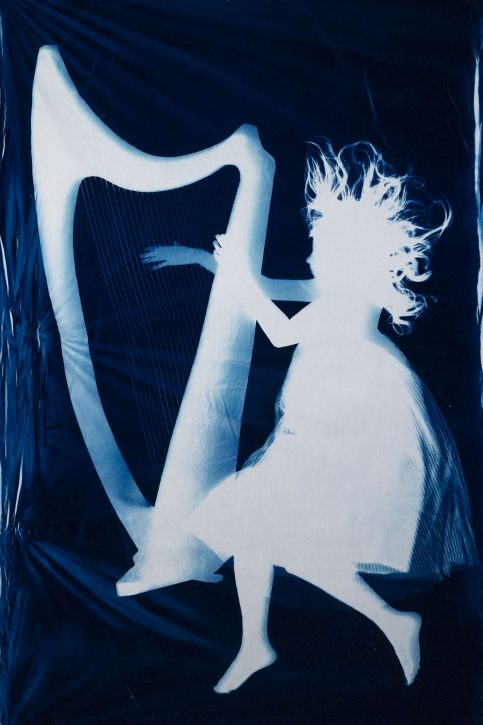

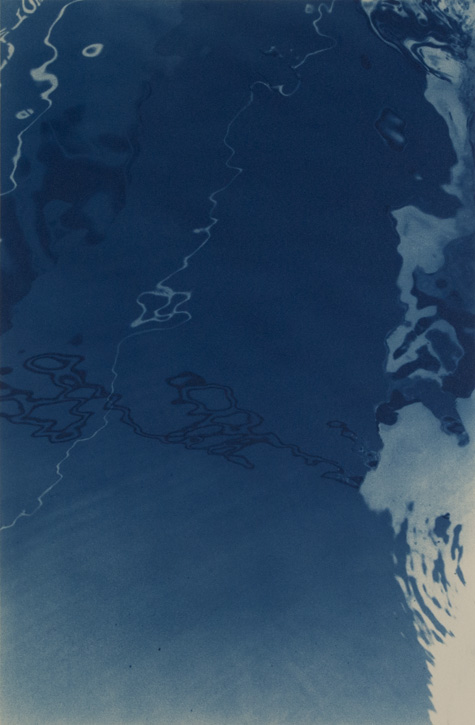

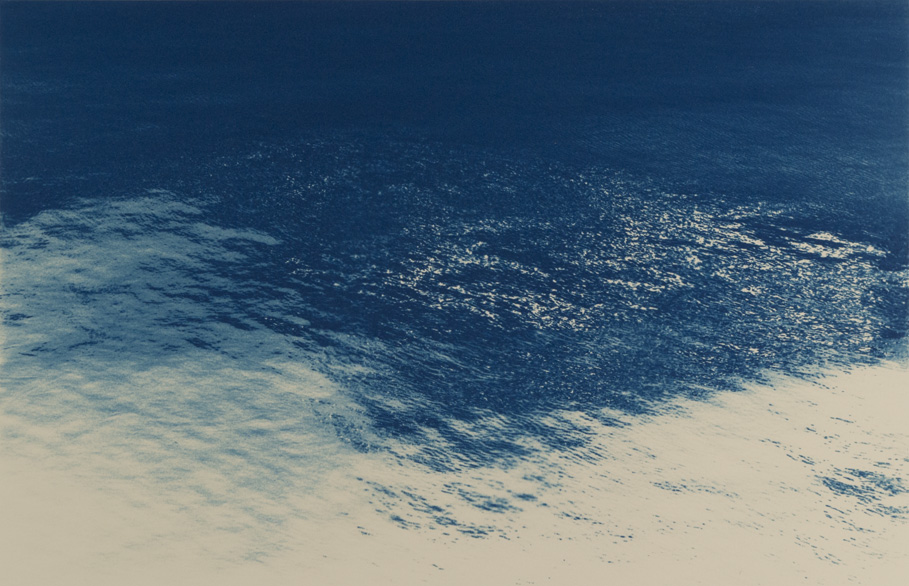




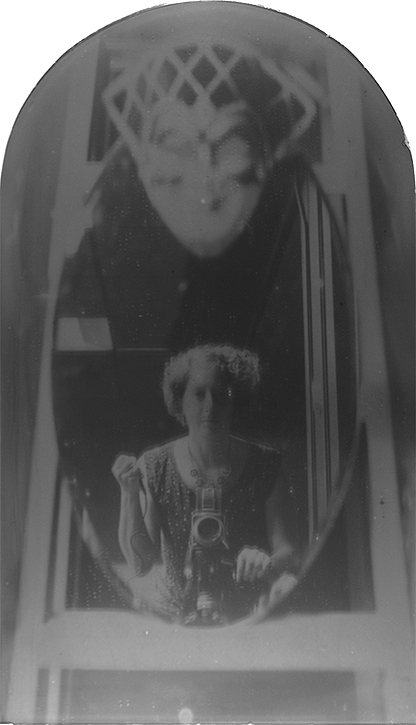
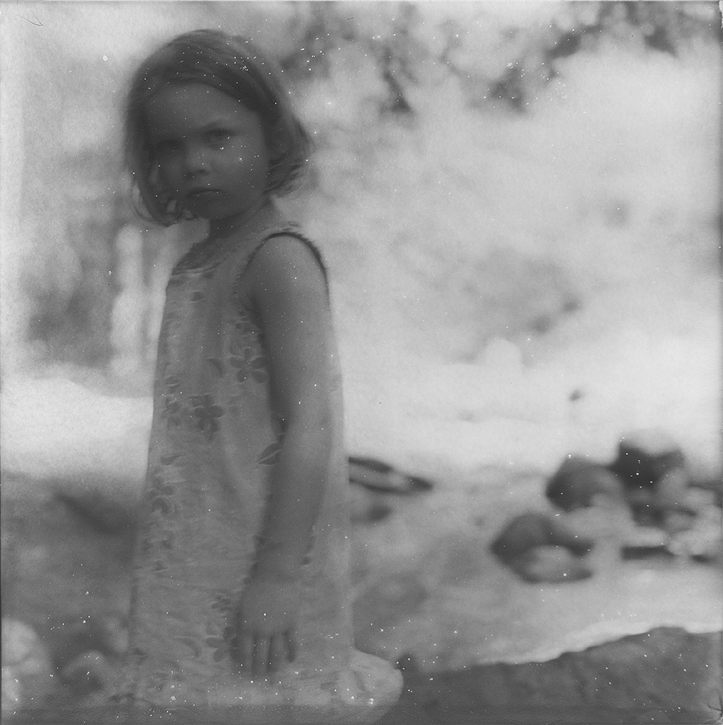
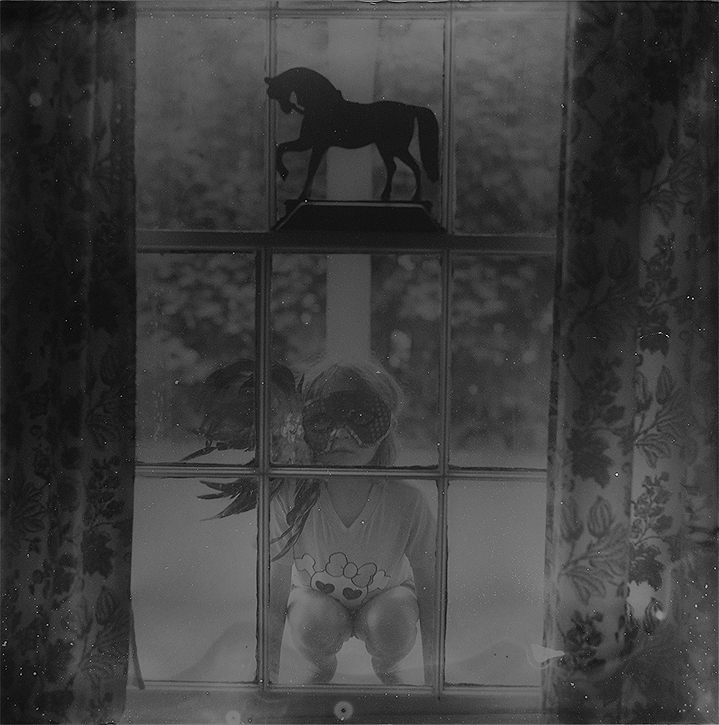
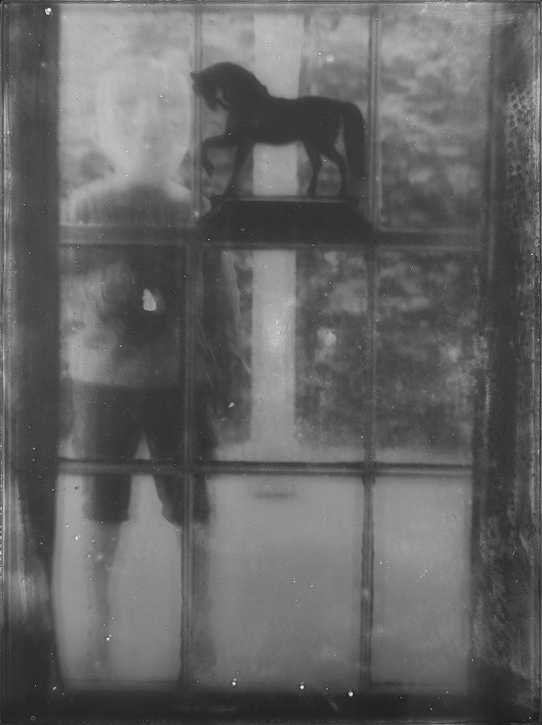
Among the Stars, 2020, cyanotype on untreated cotton fabric, 32x43"> Inquire The Harpist, 2020, cyanotype on 100% untreated cotton, 85x55"> Inquire Water Surface #43, 2016, cyanotype (edition of 3), 18.5x28"> Inquire Water Surface #44, 2016, cyanotype (edition of 3), 15.5x10.5"> Inquire Water Surface #46, 2016, cyanotype (edition of 3), 10.5x15.5"> Inquire Water Surface #54, 2016, cyanotype (edition of 3), 10.5x15.5"> Inquire Water Surface #27, 2016, cyanotype (edition of 3), 10.5x15.5"> Inquire Water Surface #20, 2016, cyanotype (edition of 3), 18.5x28"> Inquire Water Surface #6, 2016, cyanotype (edition of 3), 10.5x15.5"> Inquire Water Surface #4, 2016, cyanotype (edition of 3), 18.5x28"> Inquire Water Surface #60, 2016, cyanotype (edition of 3), 28x18.5"> Inquire Water Surface #57, 2016, cyanotype (edition of 3), 18.5x28"> Inquire Water Surface #2, 2016, cyanotype (edition of 3), 18.5x28"> Inquire Self Portrait (in the oval mirror), 2016, liquid emulsion on glass, 12.5x12"> Inquire If They Can't Find Me, They Can't Make Me, 2015, liquid emulsion on glass, 18x18"> Inquire Self-portrait with Mask #1, 2014, liquid emulsion on mirror, 23.5x13.5" Sold> Inquire It Will Be Well Met, 2014, liquid emulsion on glass, 12x12"> Inquire If she could not have a pony, she would be a pony, 2015, liquid emulsion on glass, 18x18"> Inquire Through the Ceiling of His Head, 2014, liquid emulsion on mirror, 16x12"> Inquire
Jaclyn Kain
Jaclyn Kain’s meticulous photographic process lends itself well to her elusive subject matter.
Kain’s 2016 series of photographs momentarily suspend the ever-changing and abstract reflections that play on the surface of the water in the Boston Harbor. Negatives are made from the original digital files and contact-printed using the cyanotype process, which involves painting a light-sensitive, two-part chemistry onto any absorbent surface. The print is exposed in the sun and requires only water to develop. The subject matter and the methodology of the work are intertwined, light and water being both the content of the work and the ingredients required to process the prints. The rich blue hues enhance the transformation of water into formal patterns of light, shadow, and tonality. The resulting images are not reflections of reality but rather reflections of the infinite configurations that fleetingly play on the surface of the harbor.
A technique that Kain discovered in 2014 starts with liquid emulsion being applied to a glass or vintage mirror. This prepared surface is then exposed under an enlarger to her negative, while simultaneously being developed, resulting in the finished object. A test print, commonly used among photographers, isn’t possible with this technique. What results from this process is often uncontrollable and immediate, characteristics that Kain both likes and nudges.
The work and all its mystery is enhanced by Kain’s process. The surfaces resemble skin; they are uneven, cloudy in some places and transparent in others, and evasive.
In her previous work her models were set in simple interiors, revealing subtle differences in their form. In her new work, the actors and actresses are very close to Kain: her daughter, son, and even a self-portrait. The work is much more part of a narrative or drama that is quietly unfolding. Kain’s identity as an artist and mother is explored in a domestic setting, presumably Kain’s home. The work reads as a series of tableaux.